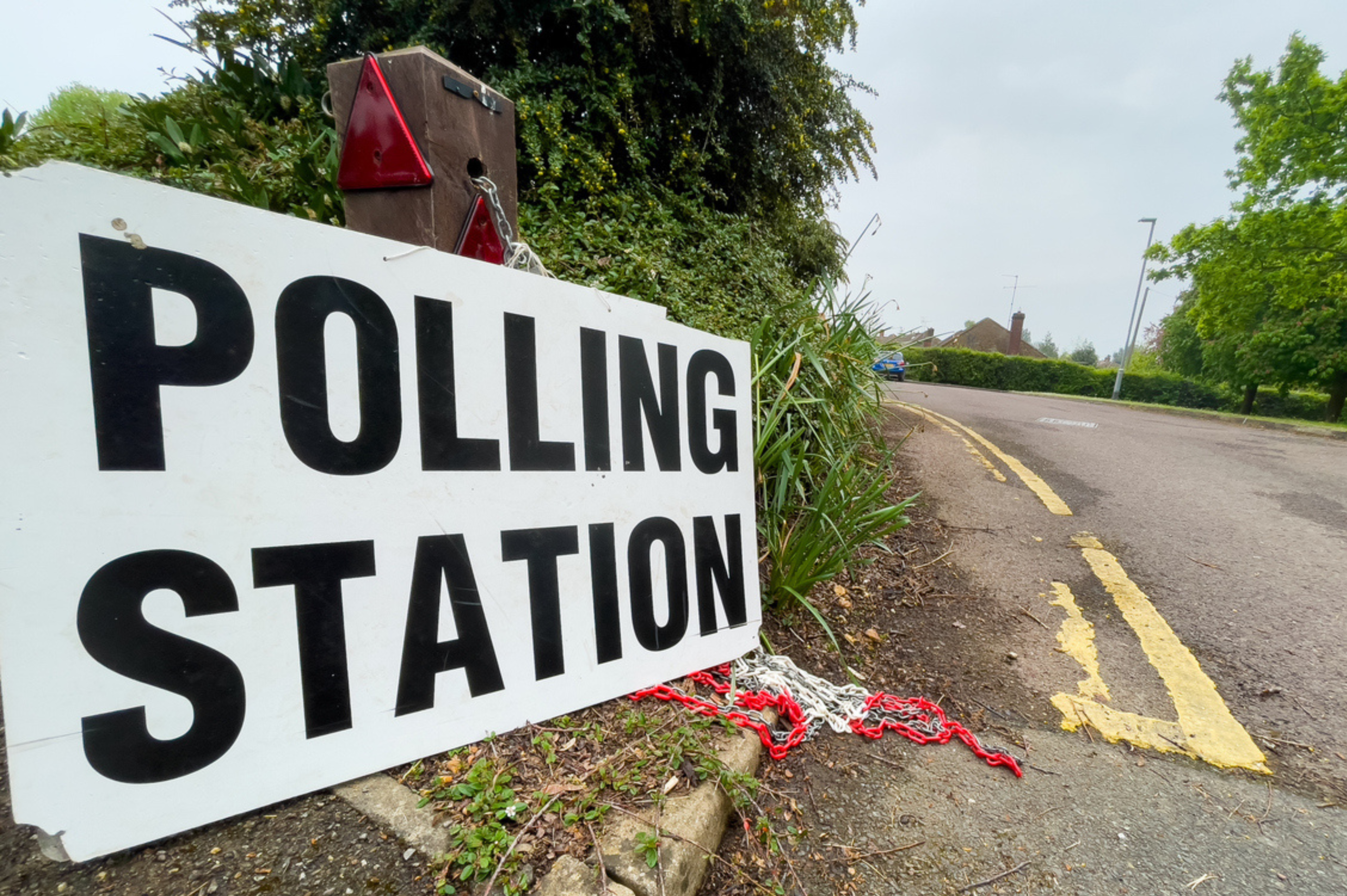
Understanding immigrant voting patterns is something all political parties are keen to do, and as we head into local elections this Thursday 7 May, party strategists from all sides will be fiercely courting any groups they think they can swing – the bad news for most of them is that “immigrants” don’t vote in predictable ways, and – surprisingly – they don’t even vote for each other.
This may seem like a pretty wild assertion when it is evident that in some locations the elected representatives are members of dominant local ethnic and minority communities, but new research indicates that immigrant voters are often more sceptical about immigrant politicians than they are about non-immigrant politicians.
So when party strategists choose immigrant candidates assuming that they will appeal to the local immigrant population, they may actually be shooting themselves in the foot – while less diverse communities may well favour minority candidates (the research shows that non-immigrant voters are largely unbothered by their candidates’ ethnicity and immigration status).
There are, of course, other strategic goals that parties may have in choosing immigrant or ethnic minority candidates – a key one being the idea that a minority politician provides a “reputational shield” for parties making decisions that may be perceived to be anti-immigrant or targeting specific communities. The fact that five of the last eight Home Secretaries – the very people tasked with making hard choices about immigration – have been members of visible ethnic minority communities is commonly pointed to as evidence of this.
This doesn’t, however, mean that the strategists should ignore the concerns and particular areas of interest of specific groups, but it does mean they need to be less superficial in thinking about what these might be and how to reach particular groups.
One extraordinary pair of political bedfellows in recent times is the Green Party and the UK’s Muslim population – as evidenced in the recent Gorton and Denton byelection, where the Greens’ unequivocal support on the issue of Gaza appears to have swung support of Muslim communities despite the party’s other positions on issues such as gay rights that may not be generally supported among religious Muslims.
The Muslim vote is a topic that generates much interest - with wild assertions of voting for both the extreme Right and Left, and common assumptions that Muslims prefer to vote for Muslim politicians. Research actually shows that in-group voting amongst Muslim voters is highly context dependent.
In some contexts, Muslims indeed really show a preference for in-group politicians – often, it seems, favouring Muslim politicians who are “unapologetically Muslim”. But where these voters have mostly encountered Muslim politicians who do not privilege their religious community's interests, the fact that they are fellow Muslims becomes largely irrelevant.
The problem for party strategists fielding Muslim candidates is that in most contexts across Europe, Muslim politicians are electorally incentivised to distance themselves from the stereotypes about their group. Non-Muslim voters are generally very negative about Muslim politicians, irrespective of whether they are male or female, an immigrant or not. However, when they distance themselves from their group, the bias completely disappears.
For instance, if a Muslim politician is critical of Islam or immigration, non-Muslim voters are just as likely to vote for them, compared to a Christian or non-religious politician. Muslim voters, however, don’t let identity get in the way of making their vote choice as much non-Muslim voters do.
It’s not possible to accurately predict how Muslims or members of other minority or immigrant communities will vote in the upcoming elections, due to the very simple fact that most voters have not decided what to vote and whether to turn out at all, but one thing that is clear is that simplistic presumptions about people voting for someone just because they share ethnic or religious characteristics are a good way of getting it wrong.