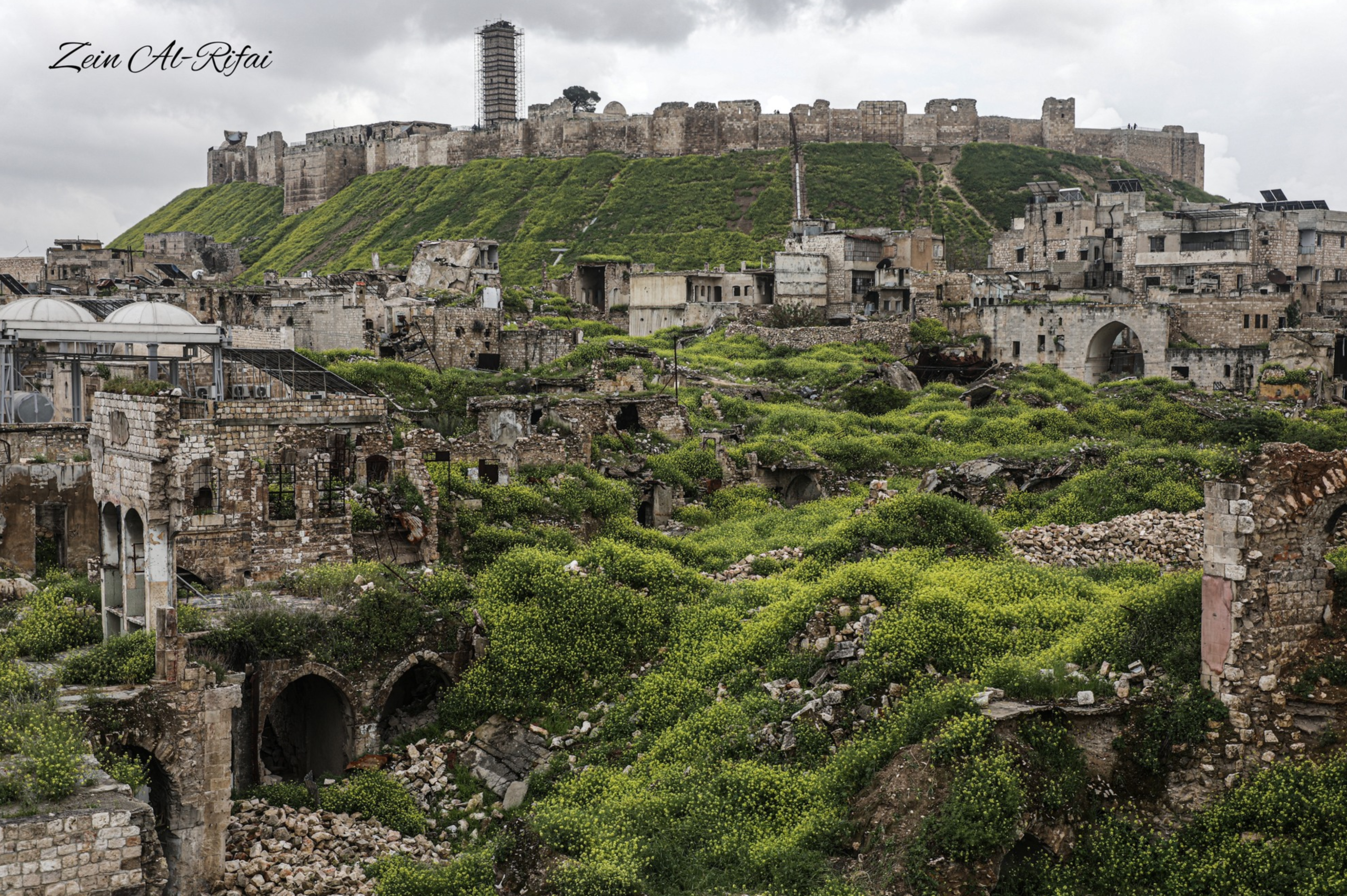
Amid demolished houses and crumbling infrastructure, more than 1.5 million Syrians returned to Syria within a year of Assad’s fall. Standard refugee policy alone cannot explain this movement; dignity and belonging can.
When Syrians ended over five decades of Assad family rule in December 2024, international organisations moved swiftly to assess whether the country was ready for the return of refugees. The criteria used to measure such readiness were familiar: Was housing available? Was it safe? Were public services functioning? What about employment prospects?
The conclusion was unequivocal: by every measurable standard, Syria was not ready.
Despite warnings from humanitarian organisations and international bodies, more than 1.5 million Syrians returned anyway. Some families erected tents on the rubble where their homes had once stood.
This is not a story about irrational decisions. This is a story about a humanitarian system long calibrated to the wrong measure. As an Aleppan who has been back to Syria, I know firsthand that what humanitarian systems measure about Syria and what Syrians actually experience are often not the same thing. My research seeks to examine this disconnect.
The checklist that missed the point
In 2025, the UNHCR surveyed Syrian refugees across Egypt, Iraq, Jordan, and Lebanon to understand more about their perceptions of and intentions to return to Syria. The findings showed the primary drivers to be homeland attachment and family reunification. Conspicuously missing from the survey checklist, however, were freedom and dignity — the prospect of living beyond a regime that had issued arrest warrants for one in three of its own population, deployed chemical weapons against residential areas, and operated detention networks in which 15,000 people reportedly died under torture.
This omission is structural, not accidental. Humanitarian systems typically use material benchmarks because they are measurable, fundable, and politically manageable. Freedom and dignity are harder to capture in a log-frame. However, no improvement in housing under Assad’s rule would have resulted in mass return because shelter was never the obstacle. The collapse of the regime removed the primary barrier — the fear of detention, disappearance, or death — and Syrians returned accordingly.
"Just Syrian"
Within hours of Assad’s fall, a video posted by a Syrian Harvard student amassed nine million views. Through tears, Sarah declared she was no longer a "Syrian refugee" but "just Syrian". The phrase spread at a rate no policy announcement could match, arguably because it articulated something standard humanitarian frameworks had no category for.
The refugee label is formally a protection mechanism. In practice, however, the label also functions in a more ambivalent way. Obtaining refugee status demands that displaced people demonstrate a well-founded fear of persecution through complex procedures, often whilst navigating environments openly hostile to their presence. For many Syrians, the category became a continuation of the dehumanisation initiated by Assad’s security apparatus — now administered by well-intentioned international institutions rather than by regime forces.
Sarah’s declaration was not merely an emotional response to political change. It was a public rejection of an identity imposed by authoritarian violence and sustained by humanitarian bureaucracy.
Home as a condition, not a location
Widely circulated footage showed Syrian families erecting temporary shelters on the ruins of former homes. One returnee explained the choice plainly: "I came and put up a tent on the ruins, but the main thing is that I live in my country after the success of the great revolution and liberation."
Policy analysts might interpret this as a newfound sentiment of nationalism or as the residue of trauma. A more precise reading recognises a cost-benefit calculation — one in which the psychological cost of continued displacement in a country offering survival without belonging outweighs the material hardship of inadequate shelter in a liberated homeland. Syrian returnees described border crossings on social media as "the return of the soul to the body"; a loaf of bread eaten in Syria as "worth nothing less than paradise". They articulated, with striking precision, a categorical distinction between existing in a place where one is tolerated as a temporary guest and living in a place where one belongs as a full human being.
Building policy on the right question
The geographical distribution of returns makes the dignity argument impossible to dismiss. Of approximately one million Syrian refugees in Germany, roughly four thousand have permanently returned since Assad's fall. By contrast, neighbouring countries hosting roughly four million Syrians recorded approximately 1.6 million permanent returns over the same period.
The standard explanation accounts for this disparity in welfare provision and citizenship pathways in Europe. But this explanation overlooks a critical variable: what people stand to lose. Syrians in Germany would surrender hard-won legal protections; Syrians in neighbouring countries relinquish considerably less. A return policy framework incapable of measuring what displaced populations sacrifice by leaving will consistently arrive at the same belated conclusion: people return not because conditions are “ready,” but because belonging and dignity cannot be indefinitely substituted for welfare.
"Go and see" visit programmes, voluntary return frameworks, and repatriation support packages all presuppose that information about material conditions governs the decision to return. For Syrians, material conditions mattered, but remained secondary. The fundamental question was never whether Syria had functioning hospitals. The question was whether Syria had become a country where a Syrian could live as a Syrian: without fear, without a travel ban, without a knock at the door at midnight — without being erased by a regime, a label, or a protection system requiring performed vulnerability as the price of safety.
Humanitarian organisations, host governments, and Syria’s own transitional leadership would do well to start measuring what has long been absent: whether return restores or further fragments the sense of self ruptured by dictatorship and displacement. For the Syrians who returned to rubble and called the rubble paradise, that question has already been answered.