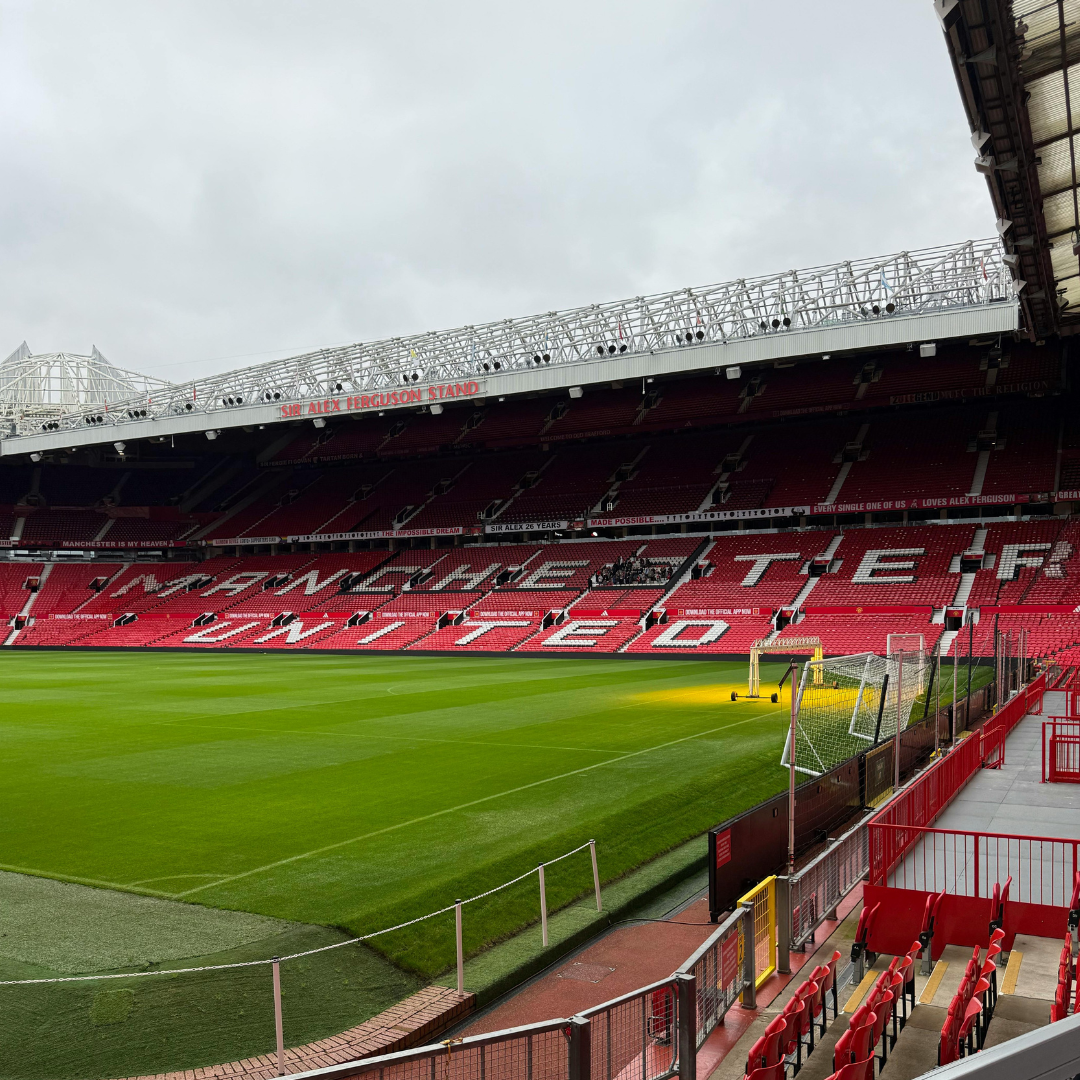
The UK has been “colonised by immigrants”, Jim Ratcliffe, co-owner of Manchester United, recently claimed. For the most part, Ratcliffe’s remarks drew widespread criticism. The UK Prime Minister described them as “offensive and wrong”, while football commentators, anti-racism organisations, and politicians condemned the language as divisive. In a subsequent statement, Ratcliffe apologised for his choice of words, though he reiterated concerns about levels of migration to the UK.
While Ratcliffe’s comments addressed migration more broadly, his reputation and influence as co-owner of one of England’s most successful football clubs offers pause to reflect on the role of migration in shaping the country’s most economically lucrative sporting industry.
They’re taking our jobs
While political debates about migration levels are legitimate, these debates sit awkwardly alongside the economic model of modern English football. The Premier League, the most commercially successful football league in the world and a competition that injects billions of pounds into the UK economy, depends on migration. Not incidentally, but structurally.
Football complicates familiar narratives about migrant labour in the UK. Much of the academic literature on migration and the labour market suggests that the impact of migration on job prospects for local workers is often small because migrants do the jobs that locals do not want to do. Migrants often concentrate in industries such as cleaning and delivery, where work is difficult, low-paid, and therefore less attractive to local workers. Subsequently, local and foreign-born workers tend to complement rather than compete with one another.
Football is different. In professional football, migrant workers are doing jobs that millions of locals would desperately want. There is no shortage of British children dreaming of becoming the next Premier League star. And yet the league is dominated by foreign-born talent.
A global workforce
Take Ratcliffe’s own club, Manchester United, as an example. As shown in the table below, of the 22 players listed as active in the men’s team, only five were born in the UK. There are multiple players born in countries such as Brazil, Denmark, France, The Netherlands and Portugal. Until recently, the club was managed by Portuguese coach Ruben Amorim. Even the co-owners of Manchester United are a United States based family with a history of migration from Lithuania. Some of the team’s players, such as Amad Diallo, have widely documented experiences related to irregular migration.
Table – Country of Birth of Manchester United players
Player - country of birth
Lisandro Martinez - Argentina
Senne Lammens - Belgium
Casemiro - Brazil
Matheus Cunha - Brazil
Patrick Chinazaekpere Dorgu - Denmark
Chido Obi - Denmark
Leny Yoro - France
Bryan Mbeumo - France
Noussair Mazraoui - Netherlands
Matthijs De Ligt - Netherlands
Tyrell Malacia - Netherlands
Diego Leon - Paraguay
Diogo Dalot - Portugal
Bruno Fernandes - Portugal
Benjamin Sesko - Slovenia
Altay Bayindir - Turkey
Tom Heaton - UK
Harry Maguire - UK
Luke Shaw - UK
Ayden Heaven - UK
Mason Mount - UK
Manuel Ugarte - Uruguay
________________________________________________________________
The case of Manchester United is representative of football clubs in the Premier League, which rely heavily on foreign-born players and managers. It has been over a decade since a UK-born manager has won the Premier League. Even some of the players born in the UK are the product of migration dynamics. For instance, the last UK-born player to win the Premier League Golden Boot (awarded to the leading goalscorer) is Erling Haaland, whom few would seriously describe as a local lad in his native Leeds.
Global and local impacts
The presence of foreign-born players affects not only team performance but also international fan engagement. It is common to travel abroad and see locals wearing the shirt of the club where their national star plays. Football allegiance often follows the migration of talent. For instance, the presence of Son Heung-min in the Tottenham Hotspur squad, made the team hugely popular in his native South Korea.
Yet, having a football team that is popular abroad is not only about TV revenue and shirt sponsorships. Globally recognised clubs stimulate local economic activity, creating business activity and jobs. Further down the football pyramid, the transformation of Premier League hopeful, Wrexham FC, after a takeover by Hollywood actors, demonstrates how global capital and international attention can generate substantial positive local economic benefits.
An irony
The Premier League provides a revealing case study in the economics of migration. It operates within a global labour market, recruits internationally - displacing local workers - and monetises international fan engagement. Its massive financial success is closely tied to the mobility of players, managers, and staff across borders.
Political leaders and business figures are entitled to debate migration policy. But there is a clear irony when prominent football executives criticise migration while leading institutions whose commercial success is built upon it.